
Have you ever been scrolling through social media or reading news online and hit a headline that immediately made your stomach drop or your pulse spike? In the middle of an intense election season, political news moves fast, and it is overwhelmingly designed to trigger strong emotional reactions.
I came across a news link posted online titled Ken Paxton dodges confrontation while slamming James Talarico as “weak” on NBC News. The headline immediately presents a dramatic narrative about the 2026 Texas U.S. Senate race, framing one candidate as ducking a fight while simultaneously hurling insults.
Instead of taking the headline at face value or letting emotional bias take over, I used a digital literacy framework called SIFT (Stop, Investigate the source, Find better coverage, and Trace claims back to original context). Here is a step-by-step walkthrough of how I analyzed this article, evaluated the claim, and determined what is actually going on.
Step 1: STOP — Identifying Red Flags and Loaded Language
Action: Before reading the article or sharing the post, I paused to evaluate the headline’s wording and my initial reaction.
Analysis: The immediate red flag was loaded, sensationalized language. Words like “dodges confrontation” and “slamming” are emotive terms designed to maximize clicks and spark outrage. While this comes from a major news outlet rather than an anonymous blog, copy editors often write headlines to maximize engagement rather than present balanced stories. Pausing allowed me to recognize that I was looking at a framed campaign narrative, prompting me to check whether Paxton was legally/procedurally dodging something (like a mandated debate) or if this was standard campaign back-and-forth.

Step 2: INVESTIGATE the Source
Action: I checked the domain, author, and section context of the article on NBC News to evaluate editorial standards.
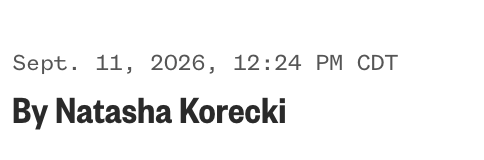
Analysis: Navigating to the top of the page, I noted that the article is filed under NBC News’s 2026-election coverage by established political reporters. NBC News is a mainstream, legacy news organization with a public editorial policy and transparent reporter bylines. While established news outlets strive for factual accuracy in reporting primary facts, political campaign coverage can still skew toward “horse-race” framing and conflict narrative. Investigating the source verified that while the factual events reported in the article are likely true, I still needed to separate raw candidate actions from newsroom commentary.

Step 3: FIND Better Coverage (Practicing Lateral Reading)
Action: I opened a new browser tab and performed a lateral search using neutral keywords: "Ken Paxton James Talarico Texas Senate debate commitments 2026".
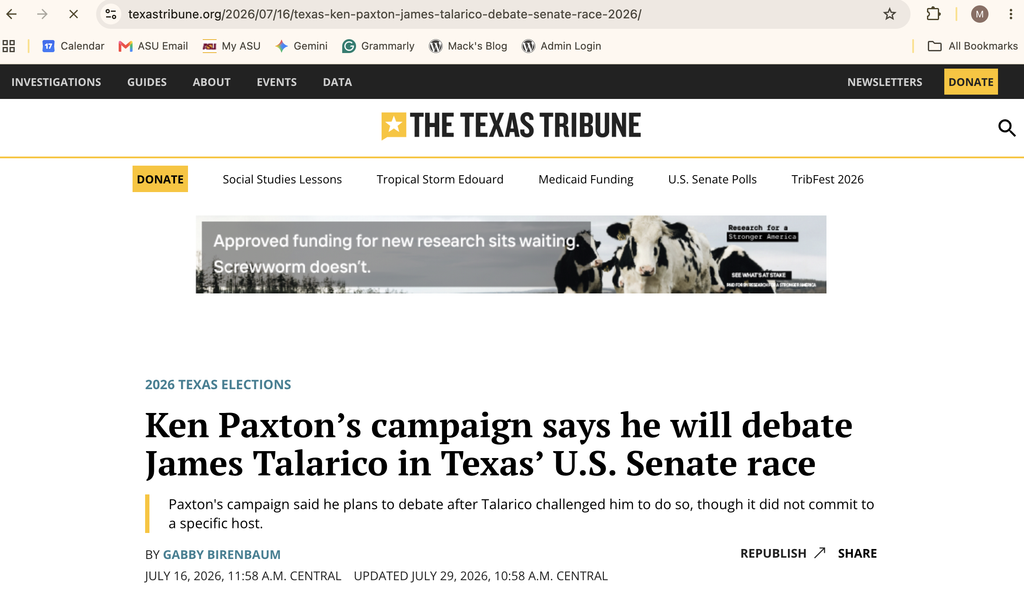
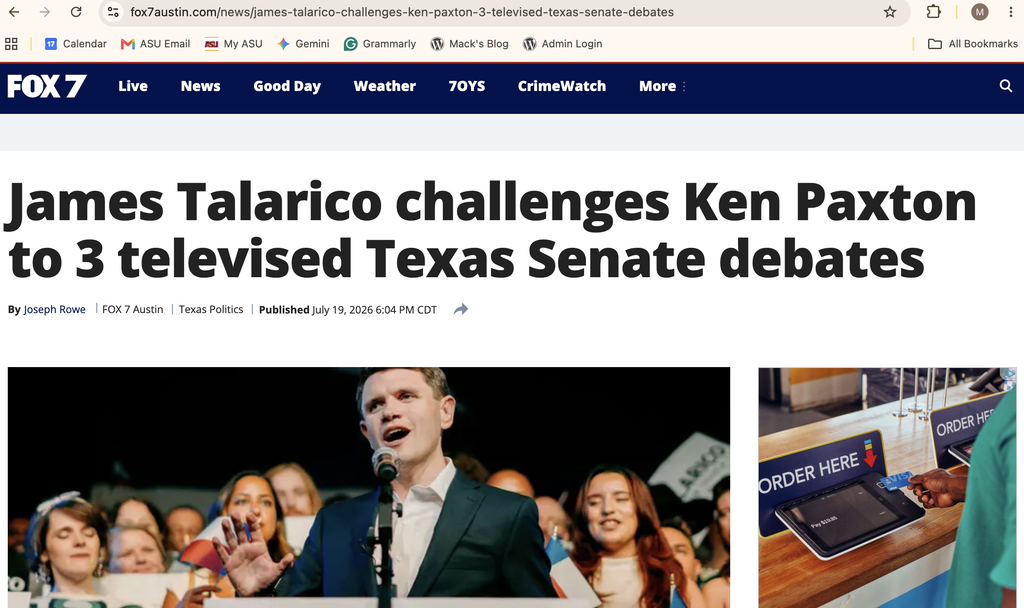
Analysis: By cross-referencing independent outlets like The Texas Tribune and local news affiliates like FOX 7 Austin, I got a clearer, more multifaceted picture. The lateral coverage revealed that Talarico had publicly challenged Paxton to three specific televised network debates. Paxton’s campaign responded that he plans to debate Talarico but declined to commit to Talarico’s preferred network hosts or dates immediately. Finding multiple sources showed me that the “dodge” described in the headline referred to a dispute over debate hosts and campaign press strategy, not a refusal to participate in the democratic process altogether.
Step 4: TRACE Claims Back to the Original Context
Action: I traced the claims to the primary sources: official press releases and campaign statements from both the Talarico and Paxton campaigns.
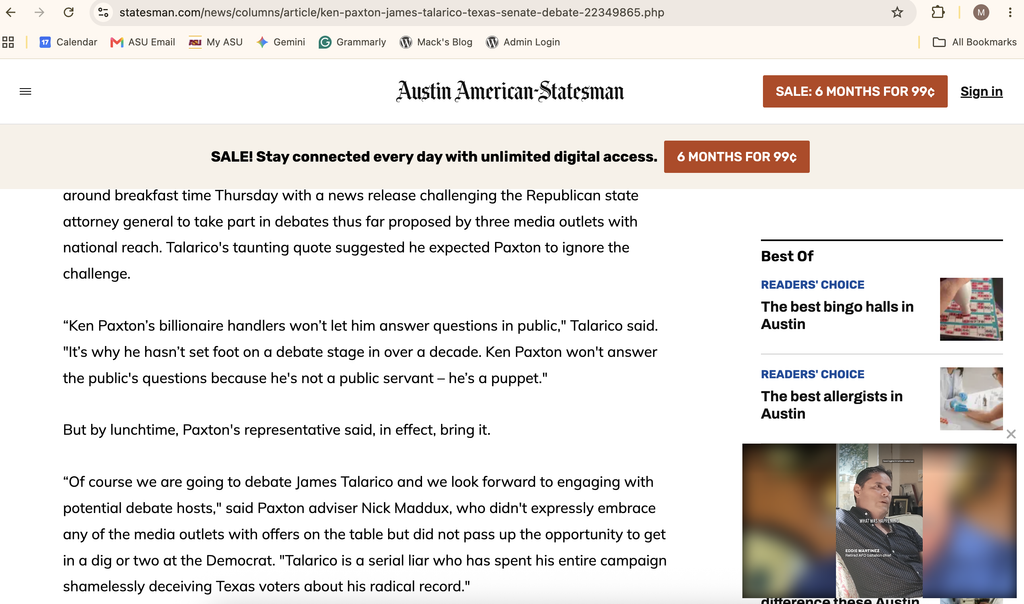
Analysis: Looking directly at the primary statements, Talarico’s campaign issued a press release accusing Paxton of hiding from voters and avoiding debates for over a decade. In direct response, Paxton’s senior campaign adviser Nick Maddux stated, “Of course we are going to debate James Talarico… Talarico is a serial liar who has spent his entire campaign shamelessly deceiving Texas voters.” Tracing the quote back to its origin showed that the headline’s framing, “dodging while slamming”, came from competing campaign press strategies, where both sides tried to dictate debate terms and land early political punches.
Conclusion
My final assessment is that the headline’s claim is partially accurate, but heavily sensationalized in tone. The underlying reporting accurately reflects campaign strategy: Democratic candidate James Talarico issued a challenge for three specific debate networks, and Republican candidate Ken Paxton’s team traded sharp insults while maneuvering for debate terms on their own conditions. However, reducing complex campaign debate negotiations to a sensationalized headline (“dodges confrontation”) distorts what is actually routine political posturing.
Taking three minutes to perform lateral reading using SIFT transformed a clickbait headline into an understanding of real political strategy. In an era dominated by rapid news cycles and inflammatory headlines, taking time to verify context prevents manipulation. Next time you read a dramatic political headline, take a breath, open a new tab, and trace the facts back to their source.
Sources & Links Visited
- NBC News: Ken Paxton dodges confrontation while slamming James Talarico as weak
- The Texas Tribune: Ken Paxton says he’ll debate James Talarico in Texas Senate race
- FOX 7 Austin: James Talarico challenges Ken Paxton to 3 televised Texas Senate debates
- https://www.statesman.com/news/columns/article/ken-paxton-james-talarico-texas-senate-debate-22349865.php